An all-Ireland charity that promotes the conservation of bats and their habitats

Bat Conservation Ireland

  • Join
  • Donate
  • Shop
  • 0 items€0.00
  • Our Work
        • Monitoring

        • Monitoring and Distribution Projects
        • All Ireland Daubenton’s Bat Waterways Survey
        • Car-based Bat Monitoring
        • Brown Long-eared Bat Roost Monitoring
        • Lesser Horseshoe Bat Roost Monitoring
        • BATLAS 2020
        • Resources

        • Publications
        • Education and Training

        • Learn About Bats website
        • Gardening for Bats
        • Bats and Bugs website
        • Online Training Platform
  • Irish Bats
        • What is a bat?
        • Species
        • Lifecycle
        • Echolocation
        • Distributions
        • Bat Landscapes
        • Bat Hotspots
        • How are Irish bats doing?
  • Advice
        • Common questions answered
        • Found a Bat?
        • Bats and Development
        • FAQs
  • Get Involved
        • Become a Member
        • Donate
        • Volunteer Your Time
        • Request a bat walk, talk or other event
        • Share your bat knowledge
        • Summer Bat Count
        • Bat Sightings
        • Funding for Bat Projects
        • How to Watch Bats
        • Gardening for Bats
        • Creating Roosts – Bat Boxes
        • Bats and Farming
        • Bats and Forestry
        • Bat Detectors – getting and using them
  • Events & Training
  • Bat Groups
  • About
        • Our people
  • Search
You are here: Home / Irish Bats / Species / Natterer’s Bat
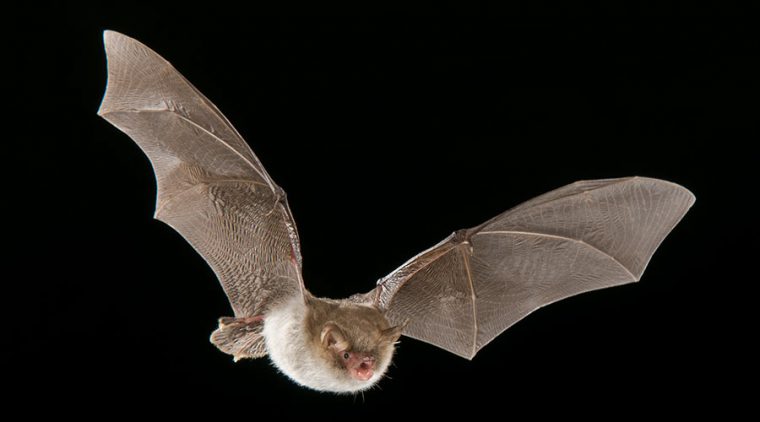
Natterer’s Bat in flight

Natterer's bat © Paul van Hoof

Natterer’s Bat

Myotis nattereri

ialtóg Natterer

One of the rarer Irish bat species, the Natterer’s bat likes woodland, mature hedgerow and pasture habitats. The Natterer’s bat has broad wings so can fly with great manoeuvrability among trees and around hedgerows. It sometimes gleans insects or even spiders from foliage and may eat larger prey at a feeding perch. Its usual roost sites are in tree holes, old stone buildings such as churches and barns, and under bridges. This species has a fringe of stiff bristles along the trailing edge of its tail membrane, which may help to hold or trap its prey.

  • What is a bat?
  • Species
    • Common Pipistrelle and Soprano Pipistrelle
    • Nathusius' Pipistrelle
    • Leisler's Bat
    • Brown Long-eared Bat
    • Daubenton's Bat
    • Natterer's Bat
    • Whiskered Bat
    • Lesser Horseshoe Bat
    • Unconfirmed/Vagrant
  • Lifecycle
  • Bat Roosts
  • Protection & The Law
  • How are Irish bats doing?
  • Distributions
  • Bat Landscapes
  • Echolocation

Bat Conservation Ireland,
Carmichael House,
4-7, North Brunswick Street,
Dublin 7
D07 RHA8

We’re on Facebook and Twitter
As well as Instagram and YouTube

  • My Account
  • Terms & Conditions
  • FAQs
  • Privacy & Security Policy
  • Contact Us
  • Sitemap

Bat Conservation Ireland is a company limited by guarantee not having a share capital, registered in Dublin, Ireland.
Company registration number 494343. Charity Registration Number 20039417.

Copyright © 2026 Bat Conservation Ireland | Website built by Made in Trenbania